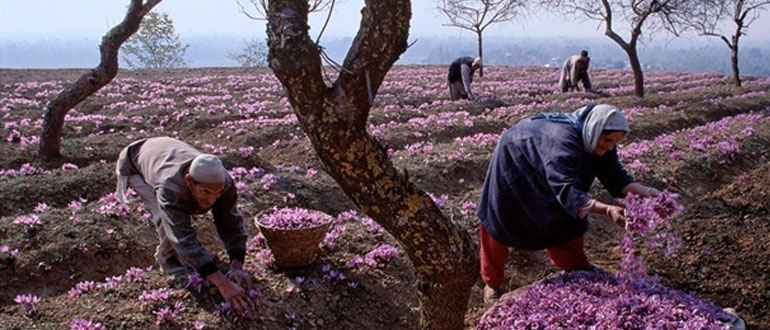
Srinagar | WTNS | Nov 29:Kashmir’s famed saffron fields, once the pride of Pampore and a symbol of the Valley’s agricultural heritage, are facing one of their toughest periods in recent memory.
Agha Syed Amin Musvi | Wilayat Times
Kashmir’s famed saffron fields, once the pride of Pampore and a symbol of the Valley’s agricultural heritage, are facing one of their toughest periods in recent memory. Farmers who have nurtured the crop for generations say the challenges today are unlike anything they experienced before.
Saffron production has sharply declined over the past decade. What was once an annual yield of nearly eight metric tonnes has slipped to less than three. Growers point to changing weather patterns as the primary reason. They describe warmer autumns, unexpected dry spells, delayed monsoon showers, and the diminishing winter chill each one disturbing the fragile rhythm saffron needs to flower fully.
The crop depends on precise climatic conditions, and even small disruptions can reduce the number of blossoms. Many farmers say that the climate no longer behaves the way it used to, leaving the land confused and the plants weakened.
While climate change poses a serious threat, it is not the only one. Saffron fields have been steadily shrinking as residential colonies, brick kilns and commercial buildings expand across Pampore. Land that once carried the purple bloom each October is now dotted with concrete structures. The soil has eroded, water tables have fallen, and the natural drainage pattern has been altered, further stressing the crop.
To keep the tradition alive, farmers and researchers have started experimenting with newer cultivation methods. Controlled indoor farming, where temperature and moisture can be carefully managed, is slowly gaining attention. Aeroponic cultivation, which grows plants in a mist environment without soil, is being tested as well. Both methods aim to protect saffron from unpredictable weather and preserve its quality.
Unexpected ecological challenges have also emerged. Wildlife intrusion, particularly porcupines that feed on saffron corms, has caused fresh losses in several areas. Farmers now spend extra time and money on measures simply to protect their fields.
The government has introduced several support programmes, including land protection initiatives, training sessions for growers, and subsidies for modern cultivation techniques. Officials say these efforts are meant to help farmers adapt to the realities of a warming climate while preserving a crop that carries immense economic and cultural value.
Despite everything working against them, saffron growers have not given up. Their resilience stands out in every field they prepare and every blossom they hope for. They know that saffron is more than a crop, it is a part of Kashmir’s identity, history and livelihood.
How the Valley responds to the combined pressures of climate change and encroaching development will likely determine the future of its generations.