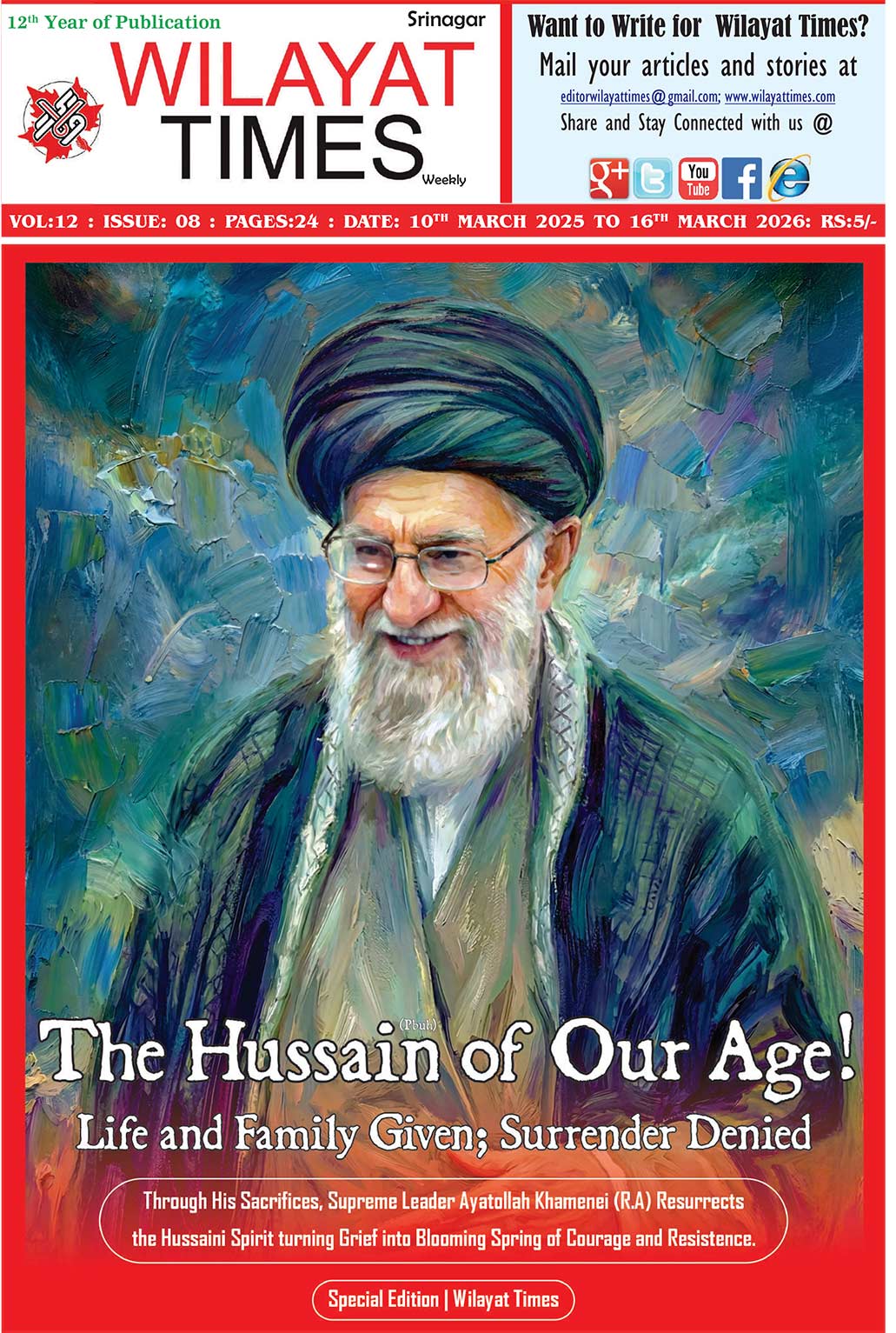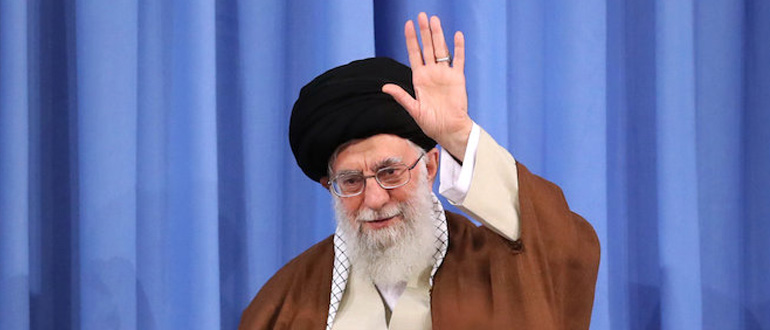
Tehran | March 10, 2026:The Supreme Leader of the Islamic Revolution, Ayatollah Khamenei, martyred in the joint attack by the criminal America and the Zionist regime on Saturday morning.
When History Refuses to Bow
Ramzan, Karbala, and the Exalted Martyrdom that Reawakened a World
By Aga Syed Amin Mousvi
Editor, English Wilayat Times
Prelude: The Night of Witness
History rarely announces itself with ceremony.
Sometimes it arrives quietly, between the final breaths of night and the first whisper of dawn—when the world lies still and a believer stands alone before his Lord.
It was during the sacred nights of Ramzan-ul-Mubarak, when hearts soften and the heavens feel closer to earth, that the Hussain of our time stood immersed in prayer. The world outside trembled with geopolitics, rivalries, and the relentless noise of power, yet within that sacred moment only devotion remained.
And then came martyrdom.
Like his noble forefather Hazrat Imam Ali (peace be upon him)—the Commander of the Faithful—who was struck while engaged in prayer during the luminous nights of Ramzan, this exalted soul too met his destiny in devotion. His life, his family, his comforts, and ultimately his breath were offered in the path of truth.
He refused surrender.
It is this refusal that binds him to the eternal caravan that began on the burning sands of Karbala when Imam Hussain (peace be upon him) chose dignity over submission to tyranny.
The Qur’an speaks with timeless clarity:
“And never think of those who are slain in the path of Allah as dead. Rather they are alive with their Lord, receiving provision.”
(Qur’an 3:169)
Martyrs do not disappear from history.
They enter it more deeply.
Karbala: The Source of a Revolution
Karbala was not merely a battlefield.
It was a revelation.
When Imam Hussain (peace be upon him) rose against injustice, he transformed Islam from a set of abstract ideals into a living, breathing force of resistance. Until that moment, faith risked becoming confined to sermons and theory—reduced to the quiet language of scholarship while tyrants ruled the world.
Karbala shattered that confinement.
It declared that Islam was not meant to exist only in books or mosques. It was meant to shape societies, restore justice, and protect the dignity of humanity.
From that desert emerged a revolutionary philosophy: that believers must resist tyranny even when the cost is life itself.
The great poet Maulana Mohammad Ali Jauhar this paradox of history:
“Qatl-e-Hussain asl mein marg-e-Yazid hai,
Islam zinda hota hai har Karbala ke baad.”
The killing of Hussain is in truth the death of Yazid;
Islam comes alive after every Karbala.
Thus Karbala became the seed from which revolutions of conscience would grow across centuries.
From Karbala to Revolution
Centuries after the tragedy of Karbala, the world again witnessed a transformation rooted in that same moral spirit.
The Islamic Revolution was not born merely from political grievance; it was derived from the spiritual legacy of Karbala itself. For generations Islam had been pushed into the realm of theory—spoken in sermons but rarely implemented as a living system capable of shaping modern civilization.
The revolution changed that.
It sought to utilize Islamic principles not only in theology but across every dimension of human life: education, governance, technology, medicine, economics, and social development. It declared that faith was not incompatible with modernity but capable of guiding it.
This vision was carried forward by Imam Ruhollah Khomeini (may Allah sanctify his soul), whose voice awakened millions. Under his leadership the philosophy of Karbala entered the arena of modern politics and global resistance.
Yet revolutions rarely travel easy roads.
From the moment it emerged, this revolution was placed under immense and turbulent pressure. Global imperial powers viewed it not merely as a regional upheaval but as a dangerous example capable of inspiring the oppressed across the world.
Sanctions tightened.
Wars erupted.
Propaganda campaigns intensified.
Failures appeared inevitable.
Yet the revolution endured.
The Continuity of Wilayat-e-Faqih
When Imam Khomeini departed from this world, many observers believed the revolution would falter. They imagined that without its founding leader the movement would dissolve into internal conflict or external pressure.
History proved otherwise.
The caravan of revolution found its guide in Imam Sayyid Ali Khamenei.
His leadership affirmed a fundamental principle of Islamic governance: that Wilayat-e-Faqih is not monarchy. It does not pass through bloodline or privilege but through scholarship, piety, wisdom and service.
In Imam Khamenei, the revolution discovered a figure whose life embodied these qualities.
His eloquence spanned multiple dimensions—education, spirituality, cultural insight, and patriotic devotion. Yet beneath these accomplishments lay something deeper: a sincere longing for martyrdom, a desire to serve faith even at the cost of life itself.
Wilayat-e-Faqih demands the highest summit of human character, the top crust of human pathos, illuminated by what believers describe as the radiant rays of Noor, divine light guiding the conscience of a leader.
The Essence of Moulla Ali
Those who observed Imam Khamenei closely often remarked that his character reflected something of the spirit of Imam Ali (peace be upon him)—the Commander of the Faithful whose humility and justice remain unmatched in Islamic history.
The lineage of Imam Ali carries not merely blood but responsibility.
And in the life of Imam Khamenei that responsibility manifested through simplicity and austerity. Despite leading a nation of millions, his personal life remained remarkably modest.
His residence, known for its simplicity reflected the humility associated with Hazrat Abu Turab, the beloved title of Imam Ali. Reports describe a life stripped of opulence: simple rooms, modest furnishings, and a personal routine far removed from the luxury often associated with political power.
Even his family followed similar simplicity.
His sons lived not in palaces but in rented homes.
This was not theatrical humility.
It was conviction.
A Scholar Among the People
Even in his late eighties, Imam Khamenei remained deeply engaged with the life of his people. He delivered sermons, conducted scholarly classes, met delegations, and monitored the development of his nation with remarkable discipline.
Observers often noted how global politicians who met him left those meetings visibly astonished.
They arrived prepared to lecture.
They departed realizing that the man before them possessed a depth of knowledge that surpassed their expectations.
For Imam Khamenei was not only a political leader but a scholar, a poet, and a thinker shaped by decades of intellectual struggle.
A Revolution Under Siege
The revolution inspired by Karbala inevitably attracted enemies.
For global powers that rely upon political dominance and economic influence, the idea of a society guided by independent religious principles appeared deeply threatening.
Thus began a long campaign to undermine it.
Multiple militant organizations emerged across the region—groups whose violence sought to destabilize the ideological foundations of the revolution. Among them was Daesh, whose brutality attempted to distort Islam itself.
Sanctions followed.
Economic pressure intensified.
Yet the revolution survived.
Because its struggle was never merely religious.
It was a battle to restore human dignity—the same dignity for which Imam Hussain (peace be upon him) sacrificed his life in Karbala.
The Propaganda War
Alongside political pressure came propaganda.
Opponents spread narratives portraying Imam Khamenei as a ruler of immense wealth, alleging secret fortunes and hidden palaces. Others claimed he had fled his homeland or taken refuge in bunkers to escape danger.
Reality revealed a different story.
Like his forefather Imam Hussain (peace be upon him), he chose steadfastness over escape. He continued his work, confronting challenges openly rather than abandoning his people.
History has always repeated this pattern: those who resist domination are often demonized by those who fear them.
The Kashmiri Connection
The influence of this revolutionary vision extended far beyond Iran.
In 1980, a relatively unknown cleric arrived in Srinagar, Kashmir—a land historically connected to Persian civilization and Islamic scholarship.
His name was Ali Hosseini Khamenei.
During that visit he delivered a brief sermon—barely fifteen minutes—inside the historic Jamia Masjid. Yet those fifteen minutes would echo across decades.
At the time Kashmir maintained strong sectarian boundaries between Sunni and Shia communities. Khamenei spoke not of division but of unity—reminding listeners that reverence for the Prophet and his family transcends sectarian labels.
The effect was immediate.
Gradually, worshippers began crossing the invisible boundaries that had long separated their communities.
A sermon became a movement.
Iran-e-Sagheer: The Persian Echo in Kashmir
Kashmir has long been called Iran-e-Sagheer—Little Iran.
Centuries earlier, Persian saints such as Mir Sayyid Ali Hamadani had carried spiritual teachings across the mountains, shaping Kashmiri culture, architecture, and literature. Persian language once served as the courtly tongue of the region for centuries.
Thus when Imam Khamenei visited Kashmir, he stepped into a landscape already connected to his civilization.
The bond deepened through education.
Hundreds of Kashmiri students traveled to the seminaries of Qom and the universities of Iran, particularly in medicine and technology. Cultural exchanges revived historical connections that had faded during colonial eras.
The Mourning of a Valley
When news of Imam Khamenei’s martyrdom spread, Kashmir responded not with indifference but with grief.
Markets closed.
Thousands filled the streets.
Men and women wept openly, carrying portraits of the man many affectionately called Agha Jan.
Sunni and Shia mourned side by side—an echo of that fifteen-minute sermon delivered decades earlier.
Children who had never seen him asked why a leader who spoke for justice had been killed.
Their elders answered with the language of Karbala.
Martyrdom and the Choice of Dignity
The Exalted Martyr of our time belonged to the lineage of Imam Hussain (peace be upon him). Knowing the dangers that surrounded him, he did not flee.
Instead he chose what Hussain chose centuries earlier: the death of dignity over the life of surrender.
In that sacrifice he offered not only himself but also the deepest lesson of faith—that the world, with all its temptations and comforts, is ultimately transient.
Like Moulla Ali, who once declared his detachment from worldly luxury, the martyr demonstrated that true leadership lies in service rather than possession.
The Fear of Martyrs
Oppressive systems believe that eliminating a leader will destroy a movement.
History repeatedly proves the opposite.
Martyrdom multiplies memory.
The philosopher-poet Allama Muhammad Iqbal captured this eternal truth:
“Shaheed ki jo maut hai woh qaum ki hayat hai.”
The death of a martyr is the life of a nation.
Thus the martyr does not weaken a cause.
He strengthens it.
Epilogue: The Unfinished Story
The revolution that began with Imam Hussain (peace be upon him) in Karbala, was revived in modern times by Imam Ruhollah Khomeini, and sustained with unwavering resolve by Imam Sayyid Ali Khamenei.
It remains, for millions, a glimpse of a moral order rooted in divine justice.
Its enemies may wield immense power.
But power alone has never determined the course of history.
Sometimes history is shaped instead by the quiet courage of those who refuse to bow.
And in the stillness of Ramzan nights, when believers rise for prayer beneath a silent sky, the voice of Karbala continues to whisper across centuries:
Stand with truth.
Stand with justice.
Stand with Hussain.