New Delhi | March 29, 2026: The image on this week’s cover tells a thousand stories: an Iranian speedboat cutting through the turquoise waters of the Strait of Hormuz, the towering mountains of Qeshm Island rising behind it, and in the distance, the silhouette of a supertanker waiting , hesitating at the mouth of the world’s most contested maritime corridor.
By Waseem Reza
Geopolitics, Wilayat Times
New Delhi | March 29, 2026: The image on this week’s cover tells a thousand stories: an Iranian speedboat cutting through the turquoise waters of the Strait of Hormuz, the towering mountains of Qeshm Island rising behind it, and in the distance, the silhouette of a supertanker waiting , hesitating at the mouth of the world’s most contested maritime corridor.
To Western media, this is a picture of aggression. To much of the rest of the world, it is something far more complex: the face of a nation that refuses to bow.
For decades, the Strait of Hormuz has been the jugular of global energy. Twenty percent of the world’s oil passes through its 33-mile-wide channel. When Iran signals it can close that tap, Washington, London, and Tokyo tremble. But what the financial pages never ask is why Iran holds this position and what it has to do with decades of broken promises, economic strangulation, and assassinations carried out in broad daylight.
This is not the story of a “rogue state” lashing out. This is the story of a nation that discovered, long ago, that its geography is its only reliable ally.
THE JUGULAR OF GLOBAL ENERGY
With Iran to the north, and Oman and the UAE to the south, the Strait is just 30 miles wide at its narrowest point. Top oil and LNG producers , Saudi Arabia, Kuwait, Iraq, Qatar, and the UAE export the majority of their cargo through it.
“It’s a critical node in the global economy for all sorts of commodities, energy and otherwise,” says Jim Krane of Rice University’s Baker Institute. He notes the Strait also transits around 45% of global sulfur exports, essential for fertilizer and metal refining.
That importance makes the Strait a key geopolitical bargaining chip for Iran amid the ongoing conflict.
HOW IRAN CONTROLS THE UNCONTROLLABLE
The Strait does not officially belong to Iran. But physical proximity gives Tehran unique leverage.
“Iran has built up, over several decades, a very large number of area denial systems,” says Michael Eisenstadt of The Washington Institute: anti-ship cruise missiles, mines, submarines, surface-to-air missiles, and drones.
Amid reports of sea mining (denied by Iran), the U.K. has deployed autonomous mine-hunting systems. But as Krane warns: “De-mining is really laborious, painstaking work. It’s much easier to lay some mines than it is to get rid of them.”
Under the new Supreme Leader, Ayatollah Syed Mojtaba Khamenei, the Strait is being used as leverage in Iran’s retaliation against the U.S. and, by extension, the rest of the world. In his first statement since succeeding his father, Ayatollah Syed Mojtaba Khamenei vowed to keep blocking the Strait despite U.S. President Donald Trump’s threat to bring “death, fire, and fury” upon Iran if it continues to impede the flow of oil.
THE HUMAN AND ECONOMIC TOLL
Since the U.S. and Israel first launched strikes against Iran on Feb. 28, at least 15 tankers have been targeted in the region, causing mass disruption to global trade and prompting oil prices to surge. Another tanker off the UAE was hit by an “unknown projectile whilst at anchor,” incurring “minor structural damage,” according to the United Kingdom Maritime Trade Operations center.
According to the International Energy Agency, Gulf producers exported 3.3 million barrels per day of refined products and 1.5 mb/d of LPG in 2025. Today, more than 3 mb/d of regional refining capacity has shut down due to attacks and a lack of viable export outlets.
As a result, the price of crude oil has jumped to above $100 per barrel on several occasions, up from around $67 before the first U.S.-Israeli strikes. The price hit as high as $98 per barrel on Tuesday still alarming for consumers and markets worldwide.
Joel Hancock, an energy analyst at investment firm Natixis CIB, says oil price rises are already being felt at gas stations, particularly in the U.S. “Within Europe, pump prices have increased, but not the same proportional magnitude as U.S. gasoline prices.” And the increase is being passed on to consumers. “We’ve had several airlines announce that they’re ramping fares up to pass on the additional cost of jet fuel.”
NO ALTERNATIVE ROUTE
These far-reaching impacts boil down to both the lack of alternative export avenues and insurance concerns.
“The key point when it comes to the Strait of Hormuz is that there is really no other exit point for the magnitude of energy flow,” says Hancock. Alternative routes simply cannot handle the same volume of oil.
On insurance: many companies have dropped war risk protections amid the conflict, and ongoing supply disruptions mean “oil is actually being lost from the market.” Gulf oil storage is approaching capacity, with production halting as a result.
THE AMERICAN PARADOX
The U.S. gets very little oil through the Strait. So why are gas prices still going up?
Gasoline prices are determined by the price of different petroleum products, including crude oil, which accounts for just under 50% of the price of gasoline. While the U.S. is the top producer of crude worldwide, its price is set based on global supply and demand. Disruptions in Hormuz raise global crude prices now spiked significantly since the conflict began , thus increasing U.S. gasoline prices at the pump. National averages have climbed from roughly $2.90 to $3.84 per gallon.
TRUMP’S RESPONSE AND ITS LIMITS
President Trump initially brushed off concerns, calling rising oil prices a “very small price to pay.” But he has since warned Iran that it will be hit “twenty times harder” if it continues to block the flow of oil.
The U.S. launched overnight attacks targeting Kharg Island, the critical hub of Iran’s oil exports. Trump framed the move as an attempt to pressure Iranian officials to end the blockade. “Our weapons are the most powerful and sophisticated that the world has ever known but, for reasons of decency, I have chosen not to wipe out the oil infrastructure on the Island,” he said, adding a warning that he may do so should Iran continue targeting vessels.
But despite the U.S. claiming Iranian military capabilities have been “destroyed,” Iran is proving it can still effectively halt the Strait.
A HISTORY OF CONFRONTATION
Iran has threatened to close the Strait on numerous occasions. During the 1980s Tanker War, Iran and Iraq launched hundreds of attacks on oil tankers. “You had hundreds of ships that were hit,” says Krane. “But the impact on the global economy was not nearly as dire. Current attacks are having a much larger impact with much less hostile action.”
In 2011, then-Vice President Mohammad Reza Rahimi vowed to block oil shipments if Western sanctions widened. Then, during last year’s “12-day war” when the U.S. joined Israel in striking three Iranian nuclear facilities — Iran’s parliament voted to close the Strait. It was a symbolic gesture, but oil futures still jumped to $80 a barrel: a warning of worse to come.
INDIA’S DIPLOMATIC WIN
In a major diplomatic victory, Iran has said the strategically critical Strait of Hormuz will remain open for India amid the escalating conflict. The waterway, the narrow mouth of the Persian Gulf through which a fifth of the world’s oil is normally shipped, has been under an Iranian chokehold since the United States and Israel launched a war against Iran last month.
Talking to Iranian State TV, Foreign Minister Abbas Araghchi clarified that the Strait, contrary to Western media claims, is not completely closed. “Many of the shipowners, or the countries that own these vessels, have contacted us and requested that we ensure their safe passage through the strait. For some of these countries that we consider friendly, or in cases where we have decided to do so for other reasons, our armed forces have provided safe passage,” Araghchi said.
“You have seen on the news:China, Russia, India, Pakistan, Iraq, and Bangladesh. Two of its ships passed through a few nights ago, and some other countries, and even Bangladesh, I believe. These are countries that spoke with us and coordinated with us, and this will continue in the future as well, even after the war,” he added.
“OF COURSE. YES”: SUPREME LEADER’S ENVOY
The representative of Iran’s Supreme Leader in India, Hojatul Islam Wal Muslimeen Shaykh Dr.Abdul Majid Hakeem Ilahi, on Saturday reiterated that Indian vessels would be allowed to pass through the strategically significant Strait of Hormuz amid the conflict in West Asia.
Speaking in an interview with ANI, Ilahi responded affirmatively, “Of course, of course. Yes,” when asked whether Indian ships would be allowed to pass through the Strait.
When asked to elaborate on the matter, Ilahi said, “I heard that our embassy tried to provide an opportunity for some Indian ships to cross the Strait of Hormuz.”
NO ENTRY FOR ENEMIES
Araghchi also indicated that vessels linked to countries seen as adversaries or those involved in the ongoing conflict would not be allowed passage. He said ships from the United States, Israel, and certain Gulf nations playing a role in the current crisis would not be given clearance to transit through the strait.
“We are in a state of war. The region is a war zone, and there is no reason to allow the ships of our enemies and their allies to pass through. But it remains open to others,” he said.
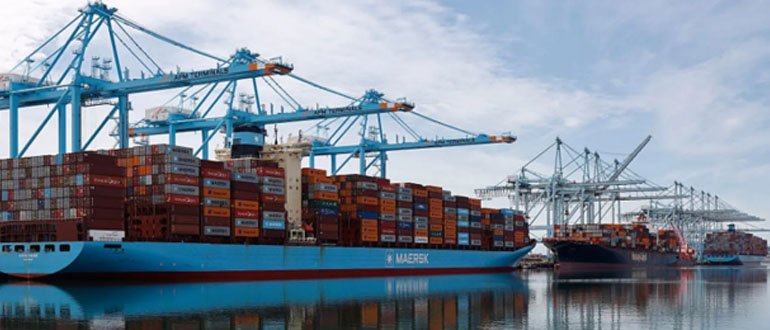
Notably, earlier this week, Iran stopped a Pakistan-bound container ship from crossing the Strait of Hormuz. The vessel, SELEN, sailing from the United Arab Emirates’ Sharjah anchorage toward Karachi, was forced to reverse course at the entrance to the crucial waterway due to the absence of transit authorization, according to the Islamic Revolutionary Guard Corps (IRGC).
Iran maintains its chokehold on the Strait through drone and missile attacks on shipping. With the conduit for a fifth of the world’s oil and LNG effectively closed, fuel shortages are occurring around the globe, and businesses from airlines to supermarkets and used car dealers are grappling with rising costs, weakening demand, and disrupted supply chains.
SHIPPING DROPPED 95 PERCENT
The war, which started with the United States and Israel’s bombing of Iran, prompted Tehran to retaliate with strikes across the region and sharply restrict access to the strait. This led to a 95 percent drop in daily shipping of energy through the critical waterway.
The channel typically sees around 120 daily transits, according to shipping industry intelligence site Lloyd’s List. However, from March 1 to 25, commodities carriers made just 155 crossings, according to analytics firm Kpler, a decrease of 95 percent. Of these, 99 were by oil tankers and gas carriers, and most were traveling east out of the strait. Just two vessels were detected crossing the strait on Wednesday, both heading west.
WHAT COMES NEXT?
The current standoff is not sustainable not because Iran is weakening, but because the world cannot afford to bleed forever. Iran knows its power. The world is finally learning to respect it.
U.S. and Israeli attacks on Iran have driven up prices, darkened the outlook for the world economy, sent global stock markets reeling and forced developing countries to ration fuel and subsidize energy costs to protect their poorest.
For Iran, the Strait of Hormuz is not a threat. It is a shield. It is the card a nation holds after decades of broken Western promises, economic sieges, and assassinations. Iran will not give it up. The question is not how to “break” Iran but when the West will finally accept Iranian sovereignty.
But Hormuz is only half the story. To the south lies Bab-el-Mandeb, the throat of global trade between the Suez Canal and the Indian Ocean. Iran’s allies in Yemen have already shown they can pressure this waterway, forcing ships to reroute around Africa.
Hormuz and Bab-el-Mandeb are not separate theaters. They are two jaws of the same vice. If Hormuz is Iran’s fist, Bab-el-Mandeb is its open palm. Together, they can strangle Western maritime arteries without a single conventional battle.
The West thinks in carriers and battle groups. Iran thinks in geography and patience. Until Tehran’s legitimate demands are met, the speedboats will remain and the world will watch both horizons.